


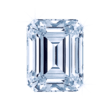



IF
Internally Flawless
Inclusions that are extremely difficult for a skilled grader to see under 10x magnification

A diamond can have many inclusions, which are able to tell us about its history, origin, or particularities about the stone. These inclusions may also alter its transparency.


Clarity describes the absence of inclusions, inside the stone, and of blemishes, on its surface, as observed under 10x magnification by a trained grader. The GIA scale has eleven grades, from Flawless (FL) to Included (I3); the diamonds offered here range from IF (Internally Flawless) to SI2 (Slightly Included).
The grade depends on the size, number, position, nature and relief of the characteristics observed. From IF to VS2, they cannot be seen with the naked eye; in SI1 and SI2, they may become perceptible depending on their position and nature, especially in step cuts, whose open table reveals the inside of the stone.
At equal weight, shape and colour, the price decreases with the clarity grade; the difference between two neighbouring grades can be significant without any difference visible to the eye. The GIA report states the grade and, depending on the report format, the position of the characteristics on a diagram.